ask family for memories after death
How to Ask Family and Friends for Stories About Someone Who Died
How to ask family for memories after death with gentle prompts, consent, privacy, and room for different kinds of grief.
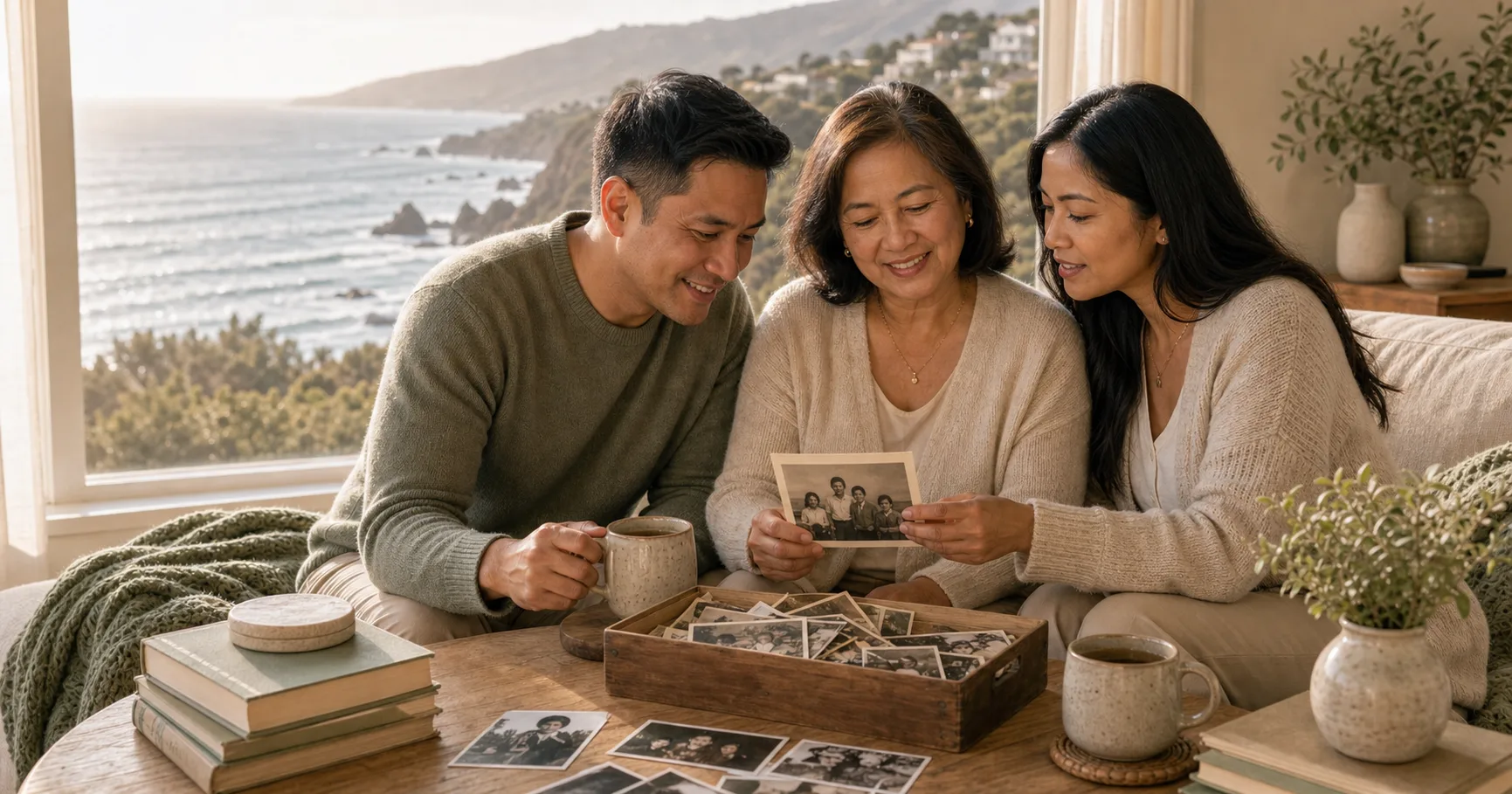
After someone dies, you may realize that no one person holds the whole story.
You may know their morning habits, but not their childhood. A friend may know their work jokes. A cousin may remember summer visits. A neighbor may remember how they helped with groceries. A sibling may remember the song they played too loudly. Each person carries a different angle.
Asking family and friends for stories after death can help preserve a fuller picture. It can also feel awkward. People may be grieving differently. They may not know what to send. They may worry about upsetting you.
The key is to ask gently and specifically.
Start with one small request
"Send me memories" can feel too big. Try one question.
"What is one phrase she always said?"
"Do you have a photo of him laughing?"
"What is one ordinary thing you remember?"
"Can you tell me a story about them from before I was born?"
"What food, song, or place reminds you of them?"
Small requests are easier to answer. They also tend to bring back more specific memories.
Give people options
Not everyone wants to write a paragraph. Some people may prefer a voice note, text, photo, phone call, video, or quick conversation.
You can say:
"You can text, email, send a voice memo, or tell me next time we talk. It does not have to be polished."
That last sentence matters. People may think they need to write something beautiful. Reassure them that ordinary is welcome.
Ask for the little things
Big stories are not the only valuable ones. Ask for details.
- What did they order at restaurants?
- What did their laugh sound like?
- What did they keep in their car?
- What annoyed them in a funny way?
- What did they do when they were proud?
- What nickname did they use?
- What did they teach you without saying it directly?
These are the memories that make a person feel real. They may not appear in an obituary, but they can mean everything to the people who loved them.
Make room for different relationships
People may remember the person differently. A parent, friend, partner, child, coworker, neighbor, and sibling all knew different versions. Some memories may surprise you. Some may be tender. Some may be complicated.
Try not to correct every difference unless the story is harmful or inaccurate in a way that matters. A fuller memory collection can hold more than one angle.
If the relationship was complicated, you can set boundaries. "I am collecting stories that feel safe and respectful right now" is allowed.
Protect consent and privacy
Before sharing stories widely, ask permission.
"Is it okay if I save this in our family memory folder?"
"Can I share this with the siblings?"
"Is this just for me?"
Some stories are private. Some involve other people. Some are funny inside a family and painful outside it. Consent helps memory stay loving.
Remayne is built for private memory keeping: presence, not replacement. It can hold stories, real voice recordings, photos, letters, and phrases for the people you choose. It should never pretend the person is alive, speak for them, or make private grief public without permission.
Ask across generations
If older relatives are available, ask them to identify people and places in photos. Ask about family sayings, recipes, migrations, neighborhoods, holidays, work, faith, music, and the person's childhood. These details can disappear quickly when no one writes them down.
Try:
"Who is standing next to her in this picture?"
"What house was this?"
"What was he like as a teenager?"
"What did Grandma always cook when people came over?"
Even a few answers can change a photograph from anonymous to alive with context.
When no one responds
Silence can hurt. It may feel like no one cares. Sometimes people are overwhelmed, avoidant, disorganized, or unsure what to say. Their silence does not mean your person mattered less.
You can ask again once, more specifically. You can ask someone closer to them. You can gather your own memories. You can leave space for stories to arrive later.
Memory collection is not a single deadline. People remember in waves.
A message you can send
Try this:
"I am collecting small memories of [Name] so we can keep their stories close. If you feel up for it, could you send one ordinary memory, phrase, photo, or voice note? It does not need to be polished. Private memories can stay private, and there is no pressure if now is not the right time."
That message gives a clear request, lowers pressure, and honors consent.
Keep what arrives
When stories come in, save them somewhere stable. Label who sent them and when. Add photos or audio files if included. Back up the folder.
Later, you may be grateful for the small pieces: the joke, the recipe, the phrase, the story no one else knew.
Thank people without grading the memory
When someone sends a memory, respond simply. "Thank you. I am so glad to have this." You do not need to explain whether it made you cry, whether it was the perfect story, or whether you already knew it.
People may send uneven pieces. A blurry photo, a half-remembered story, or one line about a habit can still matter. Gratitude keeps the door open for more memories later, and it lets people know the ordinary pieces are welcome.
If a memory is hard to receive, you can still thank them and save it for later. You do not have to process every story the day it arrives.
Remayne is not therapy, medical care, or crisis support. If collecting stories brings up family conflict, grief, or loneliness that feels too heavy, consider a bereavement therapist, grief support group, clergy or community care, or someone you trust. If you may hurt yourself or feel unsafe, contact emergency services or a crisis line now; in the U.S., call or text 988.
Remayne is not therapy and does not replace bereavement care. If grief feels too heavy to carry alone, we encourage reaching toward trusted people and qualified professional support.
Begin when you're ready.
Join the private beta