what to do with a deceased loved one's belongings
What to Do With a Loved One's Belongings, Photos, and Memories
What to do with a deceased loved one's belongings, photos, and memories with patience, privacy, and care.
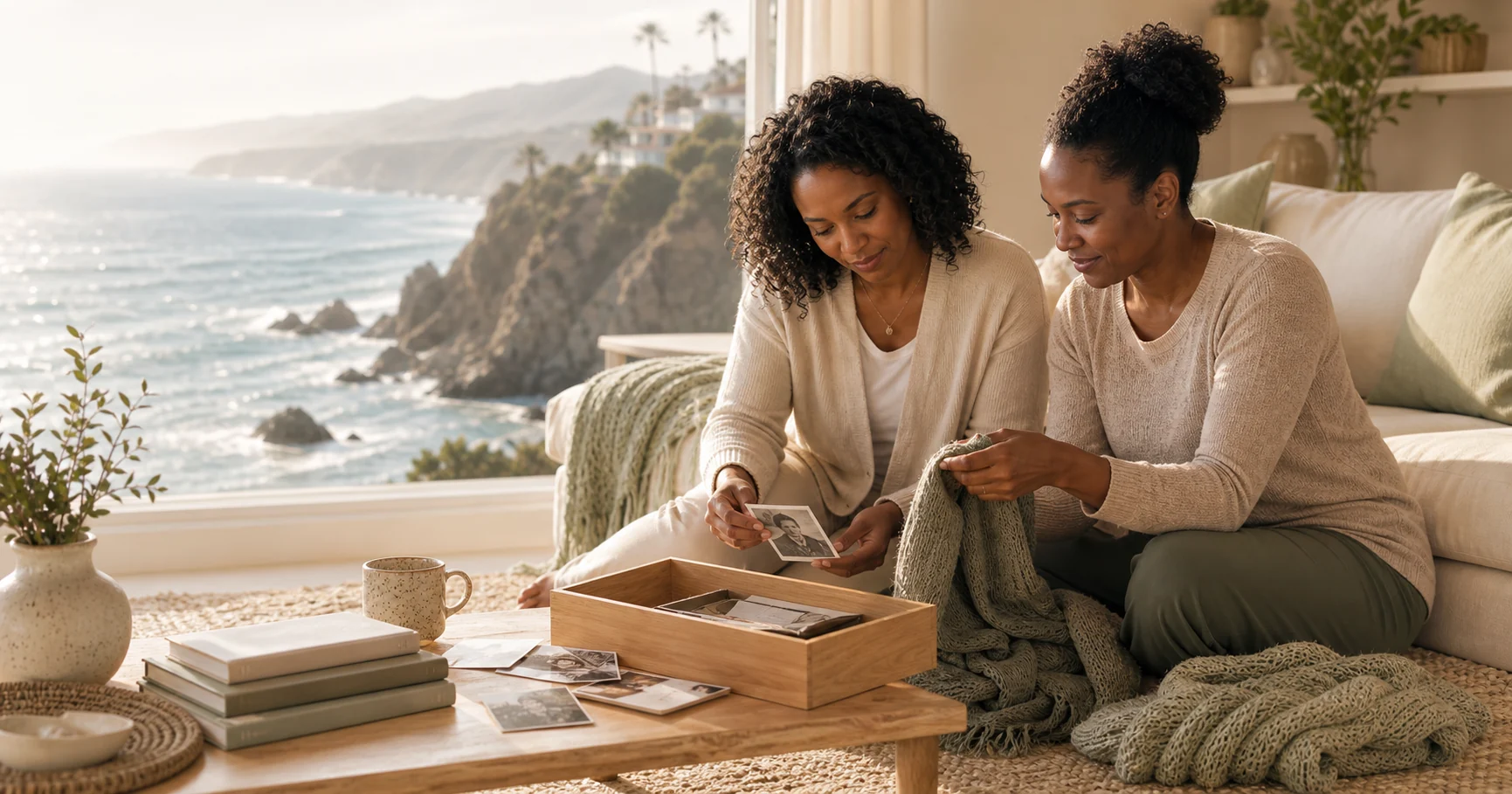
There is a moment, after someone dies, when their things become almost too full of meaning. Shoes by the door. Glasses on a nightstand. A sweater folded over a chair. Photographs in envelopes. Receipts, recipes, tools, jewelry, books, birthday cards, voice notes, and the ordinary clutter of a life that was being lived.
People may ask what you are going to do with it all. You may ask yourself. But grief does not move on a household schedule. You do not have to decide everything at once.
Start with permission to go slowly.
Protect before you sort
In the early days, sorting can feel like losing someone again. If you are not ready, protect the belongings from accidental loss first.
Set aside anything urgent: legal documents, medication, bills, keys, items needed by others. Then choose a safe place for the rest. A closet, room, storage bin, or trusted family member's home can buy you time.
Time is not avoidance when it helps you make kinder decisions.
Make three gentle categories
When you are ready, try three categories instead of dozens:
- Keep close.
- Share or give.
- Decide later.
"Decide later" is important. It keeps you from forcing a choice between keeping everything and letting everything go. Some items need a season of waiting.
For "keep close," choose what carries presence. Not what looks valuable to someone else. What feels like them to you. A worn cookbook may matter more than jewelry. A note in their handwriting may matter more than furniture.
Take photographs before parting with objects
Sometimes you cannot keep the object, but you can keep the memory. Photograph the chair, the garden gloves, the bookshelf, the workbench, the mug, the closet, the handwritten label on a box.
These images can later become part of a private memory archive. Add a sentence if you can:
"This was the sweater he wore every Sunday."
"She kept this mug by the sink."
"This drawer always smelled like cedar."
The detail is the gift. It helps memory stay specific.
Let people want different things
Belongings can bring family tenderness, and they can also bring conflict. One person may want practical closure. Another may need to keep everything. Someone may ask for an item you never imagined mattered to them.
If possible, slow the process down. Invite people to name what is meaningful and why. You may not be able to satisfy every wish, but listening can reduce the feeling that the person is being divided like property.
Some families take turns choosing. Some photograph all items first. Some set aside private items that should not be shared. There is no perfect method. Aim for dignity.
Be careful with private memories
Not every letter, recording, photo, or journal belongs in a shared folder. The person who died still deserves privacy. So do the living people connected to those memories.
Before uploading or sharing, ask:
- Would this have felt exposing to them?
- Is there someone else's private information here?
- Is this for comfort, or for display?
- Does sharing this turn grief into content?
Remayne's promise is privacy by design because memories are not raw material. They are part of a life. If you preserve photos, stories, letters, or voice recordings in Remayne, the purpose is to keep them safe and personal, not public and performative.
Give yourself a stopping point
Sorting belongings can become emotionally endless. Before you begin, choose a small boundary: one drawer, one box, twenty minutes, or three items. Stop when you reach it, even if there is more to do. Especially if there is more to do.
This kind of boundary protects the process from becoming a second emergency. You can return tomorrow, next month, or with someone beside you. The belongings waited this long. They can wait for your nervous system to catch up.
Keep a memory box small enough to use
A memory box does not need to hold everything. In fact, it may become more comforting if it holds only what you can return to.
You might include:
- One favorite photograph.
- A letter or card.
- A small piece of clothing or fabric.
- A recipe.
- A keepsake connected to a story.
- A written note explaining why each item matters.
If you have children or grandchildren, those notes can become a bridge. Objects without stories can become mysterious. Stories help them become relationship.
Digitize without rushing
Scanning photos, saving voice recordings, and gathering stories can be healing, but it can also be exhausting. Set a timer. Work in small batches. Stop before you are numb.
Start with the most fragile items: fading photographs, old tapes, voicemail files, papers that may be damaged. Then move to what feels most meaningful.
Digital preservation is not a replacement for touch. It is a way of protecting access. The original may stay in a box, but the story can be found, shared privately, and carried forward.
When letting go feels impossible
Keeping everything forever may not be possible. Letting go quickly may not be kind. There is a middle place: choosing with care, taking photographs, writing stories, inviting help, and trusting that love does not live only in objects.
You are allowed to keep the sweater. You are allowed to donate the dishes. You are allowed to change your mind about the box in the closet. Grief changes the weight of things, and that weight can change again.
If you are unsure, keep the item a little longer and preserve the story now. A photograph, a note, and a private memory can make a later decision less harsh. The object may leave your home one day; the meaning does not have to leave with it.
Remayne is not therapy and does not replace bereavement care. If sorting belongings brings up conflict, panic, or grief that feels too heavy, we encourage support from trusted people and qualified professionals.
Remayne is not therapy and does not replace bereavement care. If grief feels too heavy to carry alone, we encourage reaching toward trusted people and qualified professional support.
Begin when you're ready.
Join the private beta