pet loss fear of forgetting
Pet Loss and the Fear of Forgetting Their Name, Smell, and Routines
Pet loss can bring a deep fear of forgetting. Gentle ways to preserve routines, photos, sounds, names, and the bond with dignity.
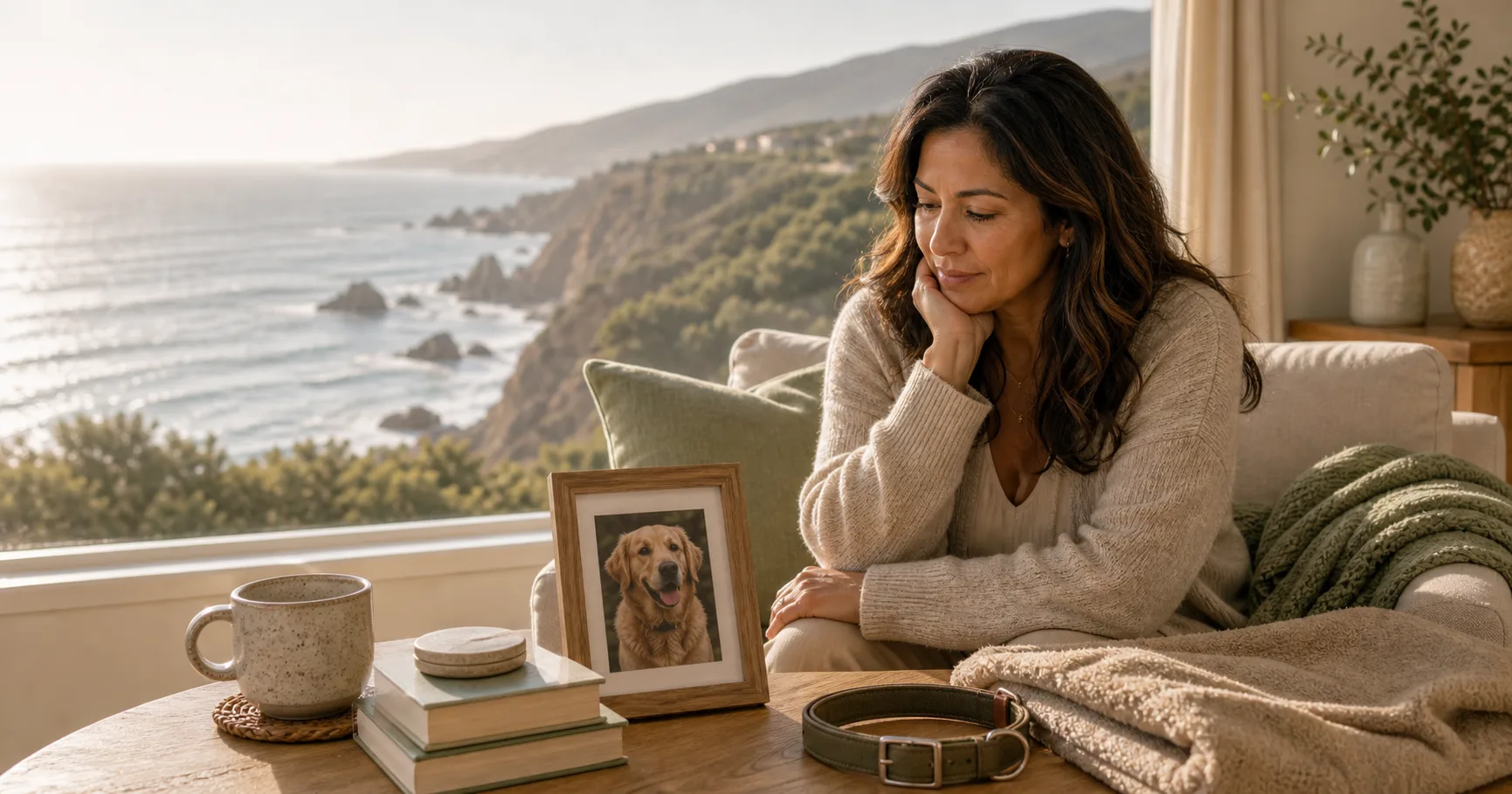
Pet loss can make a home feel rearranged by absence. The bowl is still there. The leash is still there. The couch, doorway, porch, or bed still holds the shape of where they used to be. You may hear a sound and expect paws. You may open a door slowly out of habit. You may wake up and remember, all over again, that they are not coming to greet you.
For many people, one of the sharpest fears is not only missing them now. It is being afraid that one day you will forget the details: their smell, their weight, their little routines, the exact way their name sounded in your voice.
That fear deserves respect. Pet grief is not a smaller grief. It is love attached to daily life, touch, caretaking, routine, and companionship.
Name what you miss
Start with ordinary details. Write down what you are afraid of losing.
- The sound of their paws.
- The way they looked at you at mealtime.
- Their sleeping spot.
- Their favorite toy.
- Their nicknames.
- Their smell after sun, rain, blankets, or medicine.
- Their greeting when you came home.
- The route they knew by heart.
- The way they asked for attention.
These details may feel tiny to someone else. They are not tiny to you. They are the texture of a shared life.
Keep their name close
Some grieving pet guardians keep saying the pet's name out loud. They greet a photo. They say goodnight. They tell a story. They speak the name while lighting a candle or touching a collar.
If this helps, let it help. Saying the name does not mean you are confused about the loss. It can mean you are refusing to let love become silent.
You might also write the names and nicknames in one place:
"Luna."
"Bean."
"Old man."
"Sweet girl."
"The boss of the house."
The silly names matter too. Especially the silly names.
Photograph the everyday objects
You may not know what to keep. You may want to keep everything. You may want everything out of sight. There is no single right pace.
Before changing the space, consider photographing ordinary objects:
- Food and water bowls.
- Leashes, collars, tags, sweaters, blankets.
- Favorite toys.
- The bed or sleeping spot.
- Paw prints, ashes, cards, vet notes, or medication bottles if they matter to you.
Photographs can help you release some items later if you choose. They can also preserve the ordinary setup of your shared days.
Do not rush decisions about belongings. A box labeled "not ready" is a complete plan.
Preserve routines as memories
Pet love is often built through routine. Morning walk. Breakfast. Medication. Window watching. Couch time. Bedtime. The small daily repetition becomes a language.
Write a routine map:
"In the morning, she..."
"When I came home, he..."
"At night, they..."
"The funniest habit was..."
"The thing I still catch myself doing is..."
This can help you remember not only what they looked like, but how life moved with them in it.
If people minimize it
Some people do not understand pet grief. They may treat it as less serious, shorter, or easier than human bereavement. That can make the loss feel lonely.
You do not have to defend the bond to everyone. Find the people who understand animals as family, companions, witnesses, and daily love. A pet-loss group, a grief-informed therapist, or a friend who knew them can be a real support.
You can say, "I am not looking for advice. I just need you to understand that I loved them deeply."
Let memory be truthful
Your pet may have been sweet, chaotic, stubborn, loud, anxious, funny, messy, expensive, gentle, demanding, or all of it. You can remember the whole personality. Not a perfect symbol. A real animal with real habits.
Remayne is built for presence, not replacement. It can hold photos, stories, phrases, routines, letters, and saved recordings in a private place. It should never pretend a pet or person is alive, and it should never make grief public without permission. For pet loss, that privacy can be especially meaningful because the relationship may have lived mostly in small daily moments.
Memory does not need to be impressive to be sacred.
When the fear of forgetting rises
If you panic that the details are already fading, choose one detail and save it. One photo caption. One voice note about their routine. One written memory. One video backed up. One list of nicknames.
You cannot preserve every second. You can preserve enough to help future you remember the shape of the love.
And if some details soften, that is not betrayal. You loved them in real time. You fed them, held them, cared for them, laughed at them, worried over them, and made room for them in your life. That love happened whether or not every detail stays sharp.
Let daily habits change slowly
The routines around a pet can be hard to change because they were woven into the body. You may still reach for the leash, check the water bowl, save a bite, or look toward their sleeping place. You do not have to clear every sign of them at once.
Try changing one thing at a time. Move the bowl when you are ready. Keep the blanket a little longer. Put the collar somewhere safe. Let the house learn the absence at a pace your heart can bear.
Make a ritual that fits
A ritual might be lighting a candle by their photo, walking their route, planting something, keeping a tag on your keys, writing a letter, donating to a rescue, or saying their name before bed.
It can also be resting. Grief can be exhausting. You do not have to turn pain into a beautiful ritual every day.
Remayne is not therapy, medical care, or crisis support. If pet loss feels unbearable, isolating, or unsafe, consider a pet-loss support group, a grief therapist, a trusted veterinarian's bereavement resources, clergy or community care, or someone who respects the bond. If you might hurt yourself or feel in immediate danger, contact emergency services or a crisis line now; in the U.S., call or text 988.
Remayne is not therapy and does not replace bereavement care. If grief feels too heavy to carry alone, we encourage reaching toward trusted people and qualified professional support.
Begin when you're ready.
Join the private beta